All Categories
Featured

Table of Contents
- – Professional Roof Ventilation Services San Gabr...
- – Instant Air Solutions
- – Garage Air Filtration System San Gabriel, CA
- – Garage Exhaust Fan San Gabriel, CA
- – Professional Roof Ventilation Services San Ga...
- – Industrial Ventilation Solutions San Gabriel, CA
- – Garage Exhaust Fan San Gabriel, CA
- – Garage Exhaust Fan San Gabriel, CA
- – Garage Ventilation System San Gabriel, CA
- – Garage Exhaust Fan San Gabriel, CA
- – Instant Air Solutions
Professional Roof Ventilation Services San Gabriel, CA
I've had garage ventilation on my mind for some time now. In between Eileen and I constantly doing projects in the garage, we create a whole lot of fumes from paint and discoloration.
Nonetheless, this was not the perfect remedy. Numerous paint and discoloration projects would certainly being in the garage over night loading the air with fumes, simply to be aired out when the sunlight turned up and when we can open up the garage doors. In addition to the noxious odors sitting in the garage the next early morning, it would certainly likewise delay the conclusion of these jobs.
To include in the stress, I recently got a snow blower for the upcoming wintertime snowstorms, and that was bound to leave the garage filled up with fuel smells after use. A lot more reason to look into garage ventilation systems. Exhaust Fan Installers San Gabriel. I put my reasoning cap on and roamed around the garage looking for air flow concepts.
In my previous home, I utilized to run a lot of computer tools in the garage that would generate a lot of warmth. I had actually investigated garage airing vent options at that time and chosen a small fan and air vent that might be set up directly in the garage door (using a tiny opening that you cut).
Garage Air Filtration System San Gabriel, CA
During the winter months, the garage door air vent would let all the chilly air in and drop the garage temperature level listed below the freezing point, damaging my paints and other liquids that were not meant to be iced up. The garage door vents and exhaust option left a poor taste in my mouth since, and I was determined not to seek that direction once again.
I ultimately worked out on a way of venting the garage. I would locate an ideal venting area in the garage, and cut a big square opening in the wall surface (approximately 14"x14" in between the wall surface studs). I would certainly set up self-closing shutter vents on both the interior and exterior of the wall surface.
Garage Exhaust Fan San Gabriel, CA
The dual shutter vents were going to be crucial in aiding to maintain the chilly air outside during the wintertime. I did a whole lot of study on exhaust fans and chose on one with integrated shutters.
For the exterior wall, I went a 14" aluminum shutter air vent (Exhaust Fan Installers San Gabriel). With the hardware recognized, I sought an excellent area for the air vent. The best place would certainly have been over one of the garage doors, yet for appearances, I didn't want the air vent to be noticeable from the road
It would certainly be virtually invisible however still offer its purpose. Below's the location I selected inside for the garage exhaust fan: Below's where the air vent would exhaust outdoors: Above, you'll see the first layer I experienced was the drywall. Then I had 2 layers of protecting foam. Following was the white vinyl siding.
The follower would cover all the edges, and hide any type of abnormalities in my cut. This was an essential step to stop the follower from airing vent air right into the wall surface.
Professional Roof Ventilation Services San Gabriel, CA

I couldn't just cut an opening in the house siding, insert the vent, and call it a day. To maintain water from penetrating the exterior siding, I needed to make use of J network. This would enable me to produce a framework around the air vent that would overlap the siding and secure the rough-cut sides from water.
I complied with some great guidelines on (under the area "Set up J-channel around the window"). Here's a photo revealing the put together J channel pieces wrapping around the vent: Currently came the enjoyable job of dealing with the house siding. To appropriately mount the outside air vent, I required access to the wall surface below the house siding, which suggested getting rid of a number of items of exterior siding.
, I was able to quickly remove some siding, and draw it away from the wall surface. With sufficient of the exterior siding out of the way, I was able to proceed job on the opening.
Industrial Ventilation Solutions San Gabriel, CA
Next off, I placed the shutter air vent and toenailed it in the wall studs. Here's an image revealing some progression: With the garage vent in location, I affixed the J channel framework, overlapping the rough cut sides of the plastic home siding.
I placed the exhaust follower in the red and was obtaining prepared to screw it into the studs. Then, I made a decision to check the vents on the follower to make sure they opened up and shut effectively. They opened up penalty. Regrettably, they had difficulty closing. They would certainly stick on the method down and not shut right.
After some fiddling, I discovered that the opening I cut was as well tight of a suitable for the fan framework. It was misshaping the structure ever so somewhat to trigger the shutters to not shut properly. If I pulled the fan about 2 inches out from the wall, the shutters worked fine.
I would certainly developed a 24 wood structure between the wall and the follower, to offer the exhaust follower enough range from the opening for the shutters to run properly. I essentially spent just 10 minutes on this task I sliced some 2x4s to size with the miter saw. I connected them to each other with pocket opening screws to form a framework.
Garage Exhaust Fan San Gabriel, CA
Right here's a picture of the garage wall surface exhaust fan framework (the pocket holes are hidden on the various other side): At last, the exhaust follower might be bolted to the wall surface. I pressed the fan versus the 24 framework and saw to it the shutters opened up and closed openly. I affixed the fan to the 2x4s with some sturdy screws.
As the fan speed raised to full, both the inside and outdoors shutters opened up to exhaust the garage. Below's an image of the mounted garage wall exhaust fan (powered on) from the inside: Here's a picture of the exterior of the garage wall exhaust fan, revealing the vents open with the fan on: I'm very delighted concerning our new garage exhaust follower.
We had a light snow shower (regarding 4 inches), therefore I damaged out the snowblower to attempt it out. As anticipated, when I completed cleaning out the snow from the driveway and put away the snowblower in the garage, the still-warm engine began to stink up the garage. I involved the brand-new exhaust fan for a few hours, and the garage was back to regular.
The overall price of putting the air vent fan in the garage was around $150 and was jointly concerning a day's well worth of work. If you are in requirement of exhaust followers in the garage, this tutorial will certainly have your brand-new garage wall surface exhaust follower up and running in a snap! I was actually happy with the garage air vent follower.
Garage Exhaust Fan San Gabriel, CA
I did include one even more point to our garage vent fan. I had been by hand transforming the follower on and off as needed. Occasionally I left it running longer than I anticipated. I wanted a much better system of turning the fan off. I wound up purchasing an digital timer button and plugged the fan right into it.
Of program you desire to make sure that the method the fan is turned on is hassle-free to you. Currently is the time to select.
It may deserve it to run an air duct just to compel the air to stream across. If you wish to get elegant, you could incorporate some degreee of filtering system too. This is outside the scope of your question however I constantly such as to make certain a job area is well lighted with plenty of lumens and as little glow as feasible.
An exhaust follower's capacity is the amount of air it can relocate, which is measured in cubic feet per minute (CFM).
Garage Ventilation System San Gabriel, CA
Are you thinking regarding a DIY garage exhaust fan setup yet not sure if it's truly necessary? Here are some of the key advantages: Exhaust followers remove contaminants, fumes, and odors that can build up in your garage.
You may need to double the capability if you run a store that generates whole lots of fumes or dust. You have actually obtained a couple of alternatives when it involves the sort of fan: These are usual and reasonably easy to set up. They take place your garage wall and remove the air through the exterior wall surface.
Garage Exhaust Fan San Gabriel, CA
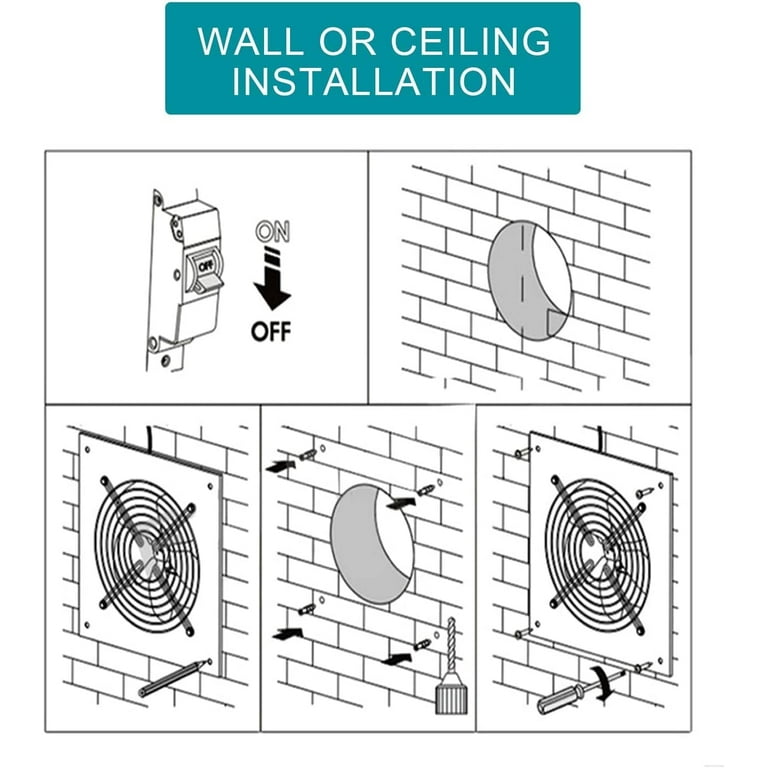
Now for the fun partinstalling the fan! It's not rocket science yet calls for some basic DIY skills. Right here's a general overview of the procedure: Before beginning, guarantee you have the right tools and materials. You'll need things like: Shatterproof glass and gloves The exhaust follower itself A determining tape Cable ports Wire cutters Screwdrivers A pencil Screws Jigsaw A pierce Safety and security initially, people! Before you start tinkering electrical energy, shut off the power to the circuit you'll be functioning on.
Do you desire it on the wall or the garage ceiling? If you're placing it on the wall, ensure it's high sufficient that you won't bump your directly it. If you're putting it on the ceiling, guarantee it's in a spot where it will supply great air movement. As soon as you've picked your place, you must cut a hole in the wall or ceiling.
Drill pilot openings in the corners of your marked area, and after that cut carefully using a jigsaw. Now, it's time to link the follower to the electrical wiring. The adhering to image shows an instance electrical wiring layout for an exhaust follower and light managed by a button and timer. Things below can obtain a little challenging, so if you're not comfy collaborating with electricity, you may desire to employ a specialist.
Instant Air Solutions
Address: 412 W Dryden St Apt 6 Glendale, CA 91202Phone: (747) 307-6363
Email: [email protected]
Instant Air Solutions
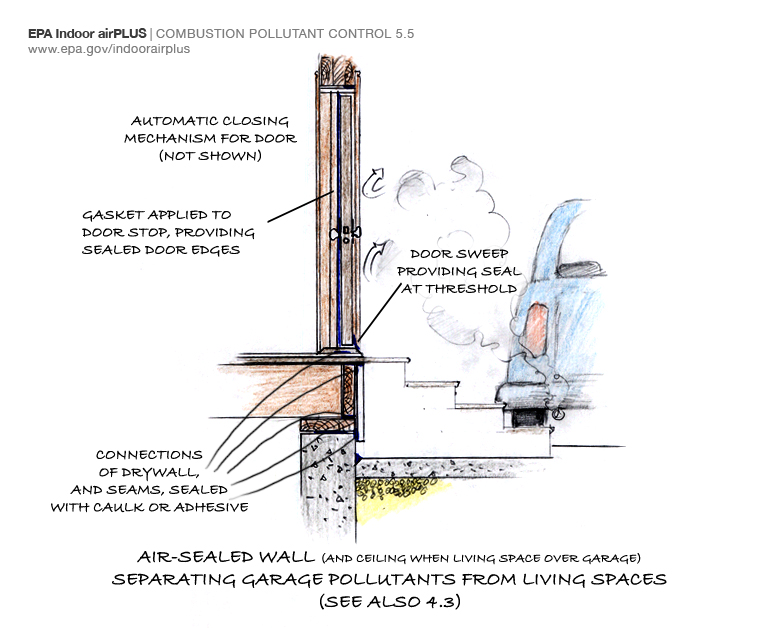
Doing so stops air leakages and keeps out pests, guaranteeing your follower operates effectively. Examine follower speed and make sure air moves out of your garage, not in.
Garage Exhaust Vent San Gabriel, CACommercial Exhaust Fan Installation San Gabriel, CA
Exhaust Fan Installers Near Me San Gabriel, CA
Commercial Exhaust Fan Installation San Gabriel, CA
Garage Wall Exhaust Fan San Gabriel, CA
Close To Me Seo Marketing Company San Gabriel, CA
Around Here Seo Companies San Gabriel, CA
Exhaust Fan Installers San Gabriel, CA
Instant Air Solutions

Table of Contents
- – Professional Roof Ventilation Services San Gabr...
- – Instant Air Solutions
- – Garage Air Filtration System San Gabriel, CA
- – Garage Exhaust Fan San Gabriel, CA
- – Professional Roof Ventilation Services San Ga...
- – Industrial Ventilation Solutions San Gabriel, CA
- – Garage Exhaust Fan San Gabriel, CA
- – Garage Exhaust Fan San Gabriel, CA
- – Garage Ventilation System San Gabriel, CA
- – Garage Exhaust Fan San Gabriel, CA
- – Instant Air Solutions
Latest Posts

Custom Web Design Mira Loma

Web Designer Near Me Corona

Eastvale Internet Marketing Agency Near Me
More
Latest Posts
Custom Web Design Mira Loma
Web Designer Near Me Corona
Eastvale Internet Marketing Agency Near Me